Tough Sell (Sentence to Story #16)

“Give me the remote, honey,” Will said to his young daughter.  She did not hear him over the drowning noise of cartoons a foot from her face glaring off the television.

“Gracie…Gracie,” he said, sitting down on the couch.

She turned around.

“I said hand me the remote please.”

Her face fell.  “Oh please daddy, don’t change it.”

“You’ve had all morning to watch cartoons.  It’s time to turn on the parade,” he said, motioning for her to bring him the remote.

“The what?” she asked, crawling to him with the remote.

“The Thanksgiving day parade.  It started a few minutes ago.”  The television flickered through the channels and finally landed on the right station.  Gracie looked at it curiously.  “Daddy, what’s a parade?”

“What?” he said with a chuckle of disbelief.

She looked back at him.  “What’s a parade?  Is it fun to watch?”

Is it fun to watch?

His mind quickly raced to Thanksgiving’s passed.  Did it matter if it was fun?  It was part of Thanksgiving.  As much a part of the holiday as turkey, or football, or leaves.  It was tradition.   Did it really matter if it was fun?  It was the Thanksgiving day parade!

Looking at his daughter he tried to assess the best way to approach it.  Listening to the two broadcasters talking about the lineup for the day’s events, he realized it wasn’t going to be easy.

“Come here, Gracie,” he said, pulling her up into his lap.  “You don’t remember watching this last Thanksgiving?”

She shook her head.

“Okay, well…a parade is a bunch of people that get together on floats and they dress them up with neat stuff and they go down the street and…”

He could tell he had already lost her.

“Um…” He kept thinking, trying to figure out how to explain it and then finally it came.  A wide smile of satisfaction came across his face.

“I know, Gracie.  A parade is just like a cartoon.  It has silly things in it and lots of colors and different characters.  Sometimes it even has music or songs.  But only it’s a cartoon that has real people in it.”

She looked at the screen and then back to him.  “Will you watch it with me?”

He gave her a nice, big hug.  “I certainly will.”

Interview with Lana Krumwiede (Win a Signed Copy of ‘Freakling’ – Giveaway at Bottom of Post)

UPDATE: Congrats to Sam K. on winning the giveaway!

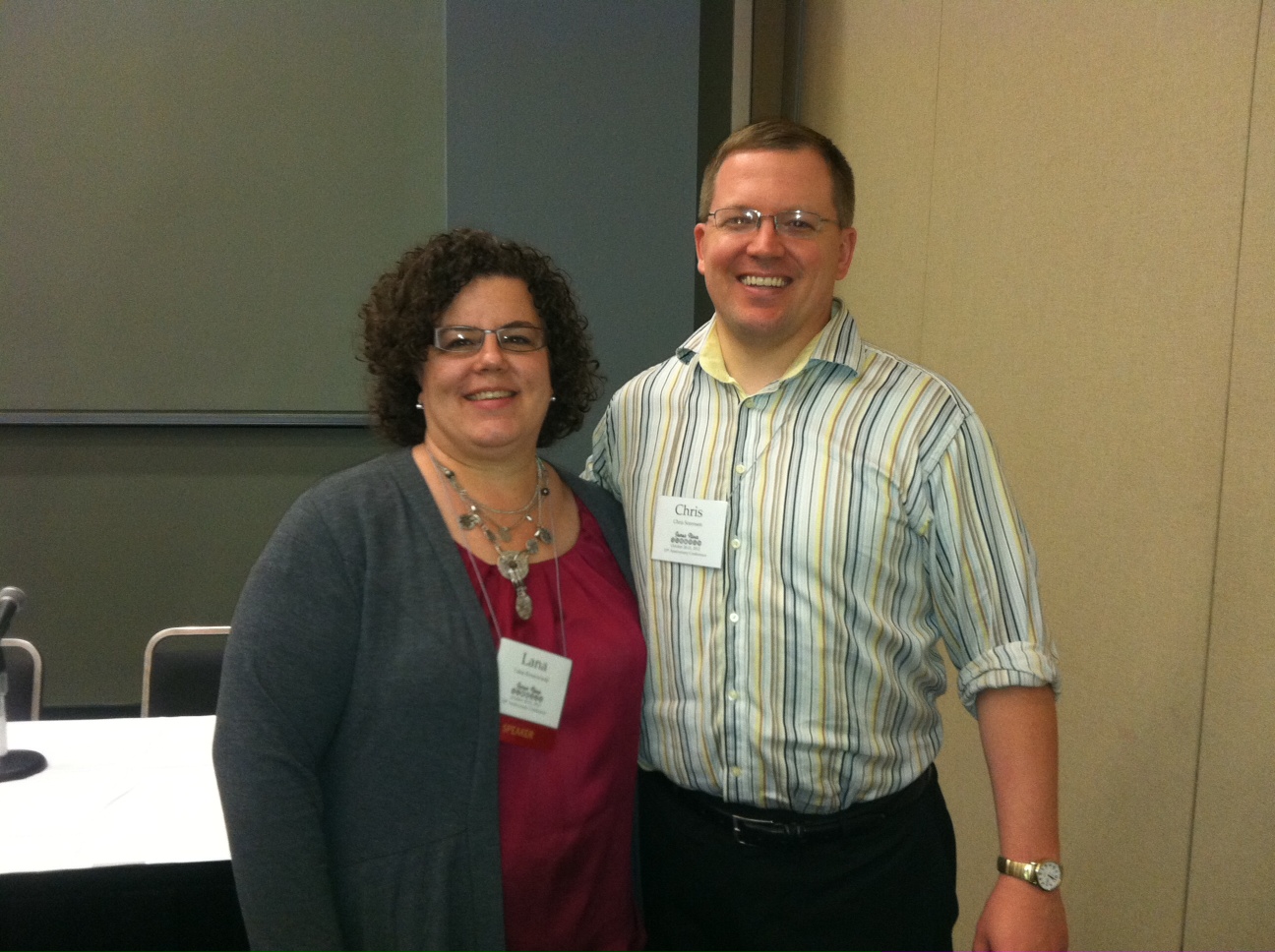
I had the privilege last month to meet with Richmond author Lana Krumwiede, not once, but twice.  First was at her book launch for her debut, MG novel, Freakling (which I love and reviewed last week).  I love to support local authors and had a blast (there were cupcakes and a magician, what’s not to love)!   She decided to have her launch at bbgb bookstore, a wonderful little independent children’s/YA bookstore in Richmond.  If you are in the area and have never been, you should go!
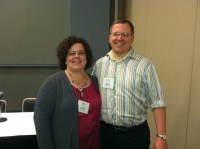
Then I got to hear from her again at the James River Writer’s Conference the very next weekend where she was on some of the panel discussions.  Apparently she didn’t think I was stalking her too much because she agreed to do this interview and to also give away a signed, hardcover copy of Freakling (see giveaway at bottom of the page).  How cool is that!?!?  No strings attached…just enter the giveaway by giving your email address or signing in with Facebook.

Thank you Lana for taking the time to write such a wonderful novel and for answering these questions for interested readers.  If you don’t already own a copy, you can purchase it at your local bookstore, or online by clicking here:

1. What was your inspiration for writing Freakling?

I wanted to write an inversion of the super-hero story. There are plenty of stories where a person discovers latent powers at the beginning of adolescence. I thought it would be interesting to tell a story where a person loses their power at this critical time. There are plenty of stories about a person with a super power trying to fit into a world of ordinary people. I wanted to tell a story about an ordinary person trying to fit into a world filled with super powers. I think we all feel that way some (or maybe most?) of the time.

2. As with many fantasy/sci-fi novels, there are some very unique names (i.e. Taemon, Yens, Moke).  How do you come up with names for characters?

I was looking for names that were different, and yet had a familiar ring to them. Most of the names are variations of names that exist in our world, which speaks to the idea that Taemon’s world is an alternate version of our own. Yens’s name came from the idea that his is ambitious and passionate, driven by his desires, while Taemon is much more reserved, though strong in his own way. The name Taemon is a mixture of strong sounds (the explosive t) and weak sounds (the murmured sound of m), which also represents his character. For the names of the supporting characters, I wrote down lists of traditional names, then mixed and matched syllables (Wiljamen, Solovar, Hannova). Challis, however, was an exception. I used to teach swimming lessons and once taught a little girl named Challis (which is a town in Idaho). I loved that name and always knew I would use it in a story someday. It seemed to fit Taemon’s long lost aunt perfectly.

3. I personally love the use of Mam (for mom) and Da (for dad) in the book; it adds an authentic feel to the setting and helps me feel more in tune with the world you are creating.  What made you decide to use those names?

I wanted Deliverance to feel like a futuristic place, but still have some earthy qualities. I liked the idea that the future doesn’t always mean moving on to something new. Sometimes we reach back for comforting things in our past. The terms “Mam” and “Da” have an old-world feel to them, which plays nicely against the dystopian feel of the book. Psi, and the lack of physical touch that came with it, has created this subconscious yearning for some of the old ways.

4. What are other books/projects you are working on right now?

I’m just finishing up the sequel to Freakling, which is untitled at the moment. There are a lot of fun things in the book, unexpected consequences of Taemon’s monumental decision at the end of Freakling.  Taemon travels to places beyond Deliverance, so we get to see a little more of his world and learn about the big picture, which Taemon was unaware of in the first book.

Also, I am working on a picture book with Candlewick, which has been a very nice change of pace. I hope to be able to share details about that soon.

5. When did you decide that you wanted to “be a writer” and become serious about it?

About three years ago, we moved from Boise, Idaho, to Richmond. Before that, I had been caring for my youngest daughter and working part-time at the YMCA; writing for children’s magazines was something I did on the side. When we arrived in Richmond in 2009, part-time jobs were impossible to find. Even the substitute teacher lists were full. At this point, I was about halfway into the first draft of what later became Freakling, and I decided to treat writing as my new job. It took me about 6 more months to finish the novel, and then work on a killer query letter and researching agents.

6. What is your writing routine?

I’ve never been very good with routines. Every day is different for me. I try to write for at least two hours each day, but even that doesn’t always happen. There are other times where I write up to 6 hours a day. I would love to get myself into a good writing routine. I think routines can really help with productivity. Still working on that.

7. What are some of your favorite books of all time and why?

The Giver, by Lois Lowry. Among the Hidden, by Margaret Peterson Haddix. I love these stories because they are filled with important ideas, moral dilemmas, and high-stakes emotion. I love that the writing is spartan and very direct, yet the images are clear and the storytelling is superb. That’s what I love the best–a well-told story that demands your attention, gives you something to think about, and stays with you.

8. If you could meet any author, who would it be and why?

I would love to sit down with Margaret Peterson Haddix and thank her for the blurb she wrote for Freakling. She is one of my favorite authors and it meant so much to me to read her lovely endorsement of my book.

9. What advice can you give aspiring writers?

There are many ways to be a successful writer. It’s more about persistence than it is about talent–persistence in improving your writing, moving on the next story, learning the skills you need to meet your goals. If you keep doing that, you will be successful. It may not happen as soon as you’d like, but it will happen.

10. Last but not least, in your bio it states that you enjoy pie and board games.  What’s your favorite pie and what kind of board games do you like?

I guess I’m American through and through, because I love a really good apple pie. With vanilla ice cream. And caramel. Mmm . . . there’s nothing better. As for board games, I love any kind of word game like Scrabble, Boggle, or Bananagrams. I can hold my own with Clue or Monopoly, but word games are my favorites.

a Rafflecopter giveaway

On The Line (Sentence to Story #15)

The man paid the taxi driver, closed the door behind him, and walked directly into the incoming traffic.

“What do you want me to do now?” the man yelled into his cell phone, holding up the briefcase in his free hand to try and slow the oncoming cars.  Brakes squealed and drivers cursed out of their windows while the man stood in the middle of the road.

“Nothing,” came the reply on the phone.  “You will stand there and make sure everyone sees you.  Open the briefcase.”

“What?” the man yelled, horns honking and commotion building all around him.

“Open the briefcase. Inside there is a gun.  Put it to your head and pretend like you are going to shoot yourself.  Do not let anybody near you until I tell you to?”

The man in the street reached down to open the briefcase, sweat dripping from his forehead.  Then he paused.  “What are you going to do with…I need to know that my wife is safe?”

There was silence for a few seconds.

“Jake…Jake,” came a female voice on the phone.  “Oh, please, God, Jake, come and get me, please don’t let me…”

Silence.

“Sarah!”

The original voice on the phone came back on.  “Your wife is fine.  If you do what we ask, we will not harm her.  We only need you to make a scene for a short while in that area and we will be done with our business. Time is running thin, though.  Take out the gun and put it to your head, now.”

Jake fell to his knees and fumbled with the briefcase until it opened.  The crowd had grown larger around him.  He looked up and saw the frustration and confusion on their faces.  Then he heard sirens.

He pulled the gun out and the crowd started to scatter, screaming as they ran.  He didn’t say anything, only put it to his head.  A couple of cop cars squeezed through on the side of traffic, stopped, and the doors opened with officers ready.

“Sir, drop your gun and get down on the ground, now!”

“You stay right where you are,” the voice on the phone commanded.

Jake looked at the officers and shook his head.  “I can’t go anywhere.”

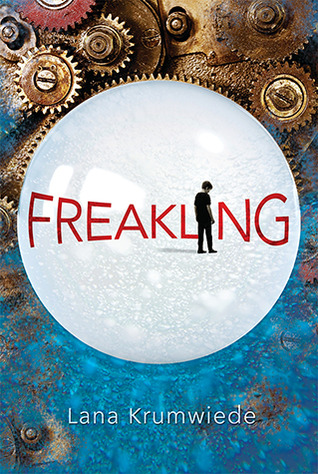
Review of ‘Freakling’ by Lana Krumwiede (Through the Shelf Thursday #7)

UPDATE: I will be interviewing the author of Freakling, Lana Krumwiede, for my next ‘Tips on Writing Tuesday;, November 13th.  Stop back by to enter to win your own autographed copy!

Title: Freakling
Author: Lana Krumwiede
Genre: MG Sci-fi/Dystopian
Description from Goodreads:

In twelve-year-old Taemon’s city, everyone has a power called psi—the ability to move and manipulate objects with their minds. When Taemon loses his psi in a traumatic accident, he must hide his lack of power by any means possible. But a humiliating incident at a sports tournament exposes his disability, and Taemon is exiled to the powerless colony.

The “dud farm” is not what Taemon expected, though: people are kind and open, and they actually seem to enjoy using their hands to work and play and even comfort their children. Taemon adjusts to his new life quickly, making friends and finding unconditional acceptance.

But gradually he discovers that for all its openness, there are mysteries at the colony, too—dangerous secrets that would give unchecked power to psi wielders if discovered.

When Taemon unwittingly leaks one of these secrets, will he have the courage to repair the damage—even if it means returning to the city and facing the very people who exiled him?

Date I Finished Reading: October 30, 2012

My Rating: 4.5 of 5

My Review: (also on Goodreads):

The premise of Freakling is what drew me in.  Young boy, just starting his teenage years, lives in a city where everybody has the same power – that’s a pretty good twist.  The power to move things with your mind – psi – is also intriguing in how Krumwiede applies it to the book; not only does it serve as a useful tool for action, but it also has a more symbolic purpose as well.  Is it possible for somebody to “lose their identity” when everybody has the same identity (i.e. psi).  Very interesting premise.

Writing characters that use their minds to move things seems no easy task to me, but Krumwiede does a good job of making it visual.  She has built a very dystopic, interesting world full of people who have become self-gratifying and almost prideful in their power.  As soon as the story starts, their is tension, especially between Taemon and his older brother, Yens.  Yens is possibly the True Son, the one who has been prophesied about to help bring balance, and he is a die hard psi worshiper.  He has no use for Taemon and his weak ways.  As a MG novel, Krumwiede does a great job pulling the reader in and having them be able to relate to the characters.  As the book progresses, more characters are introduced: the town leader who wants control, the girl that is a friend but possibly something more, the best friend, the quirky neighbor who might not be what they seem.  All of these characters are served well in the book and are given a unique voice by the author.

I also love the names in the book.  They are very personal and help to bring you into the story.  For example, Taemon calls his parents “mam” and “da”; just that subtle use really helps with setting the stage and drawing you into the world.  There is something personal, deep about it.  Authentic.

As the story progresses and we follow Taemon at home, through school, and the conflict that ensues, the pacing is good and the conflict builds and doesn’t seem forced.  And the book is not just all action.  As with any good MG book, Krumwiede desires to get the reader to think.  I love the contrast between the so-called “easy” life of those who have psi, and the perceived “duds” in the non-psi colony.  Those with psi have been taught to believe they are better than the those without.  The thought being how can someone without psi have a happy, productive life with they actually have to “do” something.  Taemon, and reader, grow through the story to a better understanding of what is fundamentally important.

While I really liked the ending, and felt it held true to the story, I felt it was rushed and ended too fast (which might actually be a good thing, because I wanted it to keep going).  I wanted it to have a little more closure, a little more time to take a step back and digest everything that had just happened, instead of being more like a cliffhanger.  I don’t know if that’s what the author’s intents were, that’s just how it felt to me.  But otherwise, the ending was very satisfying and, honestly, I did not see it coming (which is always good):-)

A very strong, debut novel with an interesting premise and great world.  Even though the premise seems to trend more toward boy readers, I say the psi-centric premise and the relationships in the book make it a great read for boys and girls and will give them a lot to think about.

Have you read ‘Freakling’?  What did you think?

Sentence to Story – Week #6: Time to Vote!

Here are the sentences for the week.  Vote for the one you think would make the BEST starting sentence to a story.

If you want to submit a sentence to be considered for next week’s voting…by all means, enter it in the comment below.  The more the merrier!

The 2 sentences with the most votes will be my prompts for next week.  Voting ends on Friday!


Sentence to Start #6 – Top 5 Submissions (Oct 29 – Nov 2, 2012)

Literary Agents #2: Why You Should Pitch an Agent (Tips on Writing Tuesday #7)

Last week I shared my experiences meeting agents over the past few months and the amazing conclusion that (gasp) they are people!

No, really, they are.

Today I want to talk about the other half of my experience: pitching an agent.

Literary agents want to find writers to represent.  They want to find that story that blows them away and gets them excited.  How do they find those stories?  One of two ways.

Either you query an agent through email/snail-mail following specified guidelines on their website or you “pitch” an agent at a writer’s conference.  A “pitch” is basically querying an agent, except it’s in person.

Today, we’re going to focus on the pitch.
As I mentioned before, I have had the chance to meet multiple agents in the last few months.  At both of the conferences I attended I took advantage of the opportunity to pitch my current novel – MAIDEN – to two different agents.
Was I scared?  You bet!
Did I survive?  Yes!
Did I learn a TON?  I learned a whole lot of TON! That’s why I want to pass it on.
Three reasons why you should pitch an agent:
1) Learn How to Present Yourself and Your Product 

The publishing world is a business, it’s that simple.  All writers got into writing because they love to write (mostly)…a good portion of writers are scared to death of the business side of things.  Either they don’t know or don’t care about marketing.  But, you need to care about marketing, at least enough to know how to present you and your story.

The more experience you get going to conferences, interacting with professionals, and pitching agents, you have no other option BUT to gain more experience.  When you pitch agents (or anybody really) you find out very quickly how you are doing in prepping your product for the marketing world.

2) Learn How to Improve Your Story

As I mentioned last week, finding an agent is like speed dating – I’m still seeking an agent myself – and the more agents you interact with

3) Learn What Type of Agent is Right For You

Find out the type of agent that is right for you – As a writer, I still personally do not have an agent (sigh), but…I definetely have a better understanding of the type of agent I want to work with.  “What?” you say!  “I’ll take any agent…it’s been my lifelong dream!”

Come back for the last post, part 3…Literary Agents: How to Pitch an Agent

Have you ever pitched a literary agent?  What was your experience?

Changes to ‘Sentence to Start’

It’s been almost 2 months since my blog went live and I can’t believe how positive it has been.  The clicks, the feedback, the positive interaction…it’s been wonderful and I have learned a TON!

One of my main reasons for starting the blog was to be more interactive, and one of the main ways to do that was the idea behind ‘Sentence to Start’ – involve other readers/writers in my daily writing process.  It has been extremely fun, but it was a big learning curve for me and it’s time for some changes.

1) ‘Sentence to Start’ is now ‘Sentence to Story’.  I think the new name helps better communicate the point.

2) I got lots of feedback that having to vote on 10 sentences was too many, so now readers will only vote on 5 sentences.

3) I found that I was overbooking myself with working on my novel, regular work, and everyday life.  With three stories a week, along with the other posts, the site was getting away from me, and the quality was going down (not a good thing).  So after readers vote on the 5 sentences, I will write stories on the top 2 (Monday and Wednesday).

So nothing major, just some corrective action to keep things moving forward, trying to keep the quality of the stories and content high, and (hopefully) keeping you guys coming back for interaction and discussion.

I hope you enjoy the stories, please continue to submit sentences, and above all, feel free to let me know other ways that I can improve the overall quality of the site!

Thanks:-)

PS – I will be taking this week off from any stories to collect new sentences and get my bearings.  

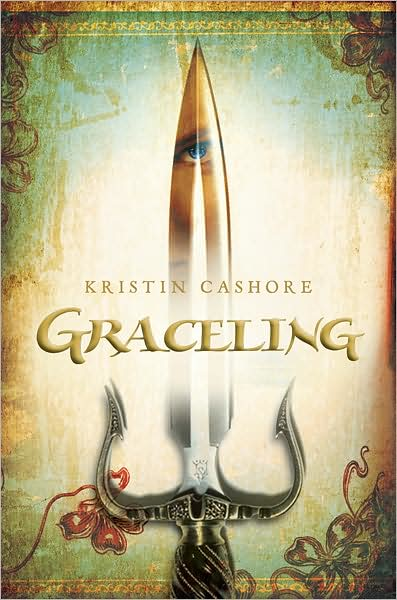
Review of ‘Graceling’ by Kristin Cashore (Through the Shelf Thursday #6)

Title: Graceling
AuthorKristin Cashore
Genre: YA Fantasy
Description from Goodreads:

In a world where people born with an extreme skill – called a Grace – are feared and exploited, Katsa carries the burden of the skill even shedespises: the Grace of killing. She lives under the command of her uncle Randa, King of the Middluns, and is expected to execute his dirty work, punishing and torturing anyone who displeases him.

When she first meets Prince Po, who is Graced with combat skills, Katsa has no hint of how her life is about to change.

She never expects to become Po’s friend.

She never expects to learn a new truth about her own Grace – or about a terrible secret that lies hidden far away…a secret that could destroy all seven kingdoms with words alone.

Date I Finished Reading: Sometime in early 2010

My Rating: 4.5 of 5

My Review: (also on GoodreadsAmazon):

I started working on my YA novel (Maiden) in late 2008.  During all of 2009 I would go to the bookstore with my good wife on date night, strolling the aisles, looking at what was new in young-adult fiction.  I knew where my story was heading – strong female protagonist, set in another world with a medieval feel, fighting, castles and action.  Specifically, I knew that eye color was going to play a big part of the story line.

Everything in the bookstores back then was vampires, supernatural, dark…it was all the same.  Then I saw the cover for Graceling and instantly fell in love with it.  The first thought that ran through my mind, “That could be the cover to my book!”  I just HAD to read it.

I instantly fell in love with the world, the characters, and the story.  The idea that there are people that have a Graceling – an advanced skill or special ability – that were identifiable by eye color…very intriguing.

The action starts off early and the conflict is explained very well.  We know what Katsa can do, what she wants, what she doesn’t want, and inevitably, what she has to do.  The formation of the Council, to me, is a little forced, but necessary for the story moving forward.  Some of the travel scenes in the book, as they move from place to place, get weighed down and take too long.

Other than that, the story shines.  I feel like I understand Katsa and can relate to her.  Po is a fantastic character as a male hero/love interest and – I would wager – one of the best in recent YA literature.  Their relationship builds steadily and over time, it’s not forced, and the dialogue is wonderful.  One of Cashore’s gifts is that she is a wonderful writer and her personality comes out on the page.  She certainly has a unique voice!

There are many fight scenes throughout the book and Cashore handles them very well, not overly technical, helping them add to the story.  The side relationships and characters – which are few – are appropriate and add depth to the story without dragging it down.

The resolution to the book is also extremely satisfying.  We are not supposed to like Randa, her uncle King, and we don’t.  We certainly are not supposed to like the mysterious King Leck, and we don’t.  The way Katsa is allowed to overcome her own physical, emotional, and mental obstacles is real.

A great story with likable characters who overcome conflict to save the day – that’s exactly how a story is supposed to be.  But Cashore’s strong voice and ability to bring me into the story, that’s what makes this one extra special.

Have you read ‘Graceling’?  What did you think?

Hard to Digest (Sentence to Story #14)

“You ate how many hot dogs?”

Jeannie answered, “Twelve.”

The boys sitting around her at the lunch table stared with a mixture of disbelief and awe.

“There’s no way,” Brady said, looking Jeannie up and down.  “You couldn’t hold down that many hot dogs.”  Monty and Pete shook their heads in agreement.  Brady started again, “There is no way you ate twelve, real size, on the bun, hot dogs in…”

“I’m telling you,” Jeannie interrupted, eyes wide open to drive home the point, “I ate twelve, real size, on the bun, in front of people, hot dogs in five minutes.”

Week after week, lunch break upon lunch break, all Jeannie had heard about was how many mayonnaise packets Monty had downed or how many goldfish crackers Pete had crammed in his mouth.  Boys and their stupid dares.

“Prove it!” Brady said, folding his arms.  The other two smirked, assuming victory.

Jeannie smiled and pulled out her phone.  She took her time, letting the boys wonder for a few seconds.

“Just in case you needed more proof,” she said, turning the phone around.  The boys clamored for it.

“No way?!” Monty screamed.

“Well get out of way, lard butt, and let me see,” Pete said, trying to push his way in.  Brady stood next to them, peering over their shoulder.

Jeannie flipped her hair back over her shoulder.  No girl at Rosemont Middle had ever – ever – felt the pride she felt as the boys in front of her ogled over the picture of her, standing in front of Vinny’s Famous Hot Dogs and Fries.  The shirt she had on in the picture was neon green and had printed, ‘Winner – Junior Division.’  The hand written sign she was holding read:

Total Dogs = 12
Total Time = 4 minutes and 58 seconds
NEW RECORD!!!

All three of the boys looked up from the picture in unison.  Brady held the phone loosely in his hand, which Jeannie gently reached over and took back.

“I would have wore the shirt in person, but I didn’t want to rub it in,” she said, turning to walk away.


First sentence of this story submitted by Gavin T. It received the second most votes for sentences submitted the week of October 8, 2012.  

Please leave comments below on if you liked the direction I took the story, or if you would have personally went a different way.  I would love to know!

Literary Agents #1: What You Should Know About Them (Tips on Writing Tuesday #6)

You’ve got your novel ready.  You have written, rewritten, revised, edited, lost sleep, written and written some more.  Beta-reader after beta-reader has torn it apart and you have made the appropriate changes.  Is your manuscript perfect?  Probably not, but it’s as good as it’s going to get.
Now what?
You are either going to self-publish or try to get picked up and published traditionally.  If you are planning to get picked up traditionally, most likely you are going to try to get an agent to represent you. 
What kind of agent do I want?
How do I get one?
Will they even know I exist?
I want to share with you some of the experiences I have had over the last few months as I have a) been researching agents and b) interacting with agents at local writing conferences I have attended.
The very best way to sum up the whole process of trying to get an agent was said by Rachel Dugas, a literary agent for Talcott-Notch, who said these wise words at Hampton Roads Writers Conference in September, “Trying to get an agent is like speed dating.”
Say whuuuu?
I can tell you she meant it figuratively, because the moment you send an agent flowers, you have taken a step backward:-)
No, what she meant was that, just as in speed dating, when you are trying to find an agent it’s all about making the right connection with the right agent.  There is not just one agent out there for every writer.
I repeat, it’s important to make connections with the right agent.  And believe it or not, those same agents are out looking to make the same connection with you.
“Are agents really interested in making a connection with me?” you ask.  
YES!  
Question: How do you think agents make a living?
Answer: By building long-term, professional relationships with writers they feel they can represent.  
That means YOU!  That means right now, this minute, there is an agent out there who wants to work with you, now you just have to find them (which, I admit, is the tricky part).
But the first thing you have to remember is that they are people, just like you and me.  Just like you want to find the right agent to represent your book – your baby – they want to find that story that they can fall in love with and they can share with the world.
You don’t have to be scared when you talk to them and you don’t have to be nervous and you don’t have to hope that it’s a once-in-a-lifetime.  
You DO have to be professional and you DO have to do your homework.  If a particular agent isn’t right for you, more often than not they are going to give you positive feedback to help you improve your work so it’s even better for the next agent that you approach.
As I mentioned, in the past six weeks I have talked to a total of five literary agents (and one editor) and every single one of them was approachable, willing to answer questions, and wonderful to work with.  They were regular, everyday people that I was able to have a professional conversation with.
You can too!
To find out more about the agents that are out there, try some of the sites listed below:
To find out more about some of the conferences that may be in your area where you can talk to an agent face-to-face, try some of these resources: 
Do any of you readers have experiences with literary agents at writing conferences?  I would love to hear about them!